Key Takeaways
- Knee pain on stairs is often caused by patellofemoral pain syndrome, a common condition that creates pain around the kneecap.
- Stairs bend your knee again and again under your body weight, so they bring out pain that flat walking may not.
- Meniscus tears, arthritis, and tendon irritation can cause a similar pattern, so the details of your pain matter.
- Activity changes, ice, and strengthening exercises relieve many cases, but pain that lingers or limits movement deserves an exam.
- St. Vincent's Orthopedics provides expert knee care in Birmingham, Gardendale, Clanton, Vestavia Hills, and One Nineteen, so request an appointment to find out what is behind your stair pain.
Why Does My Knee Hurt on Stairs?
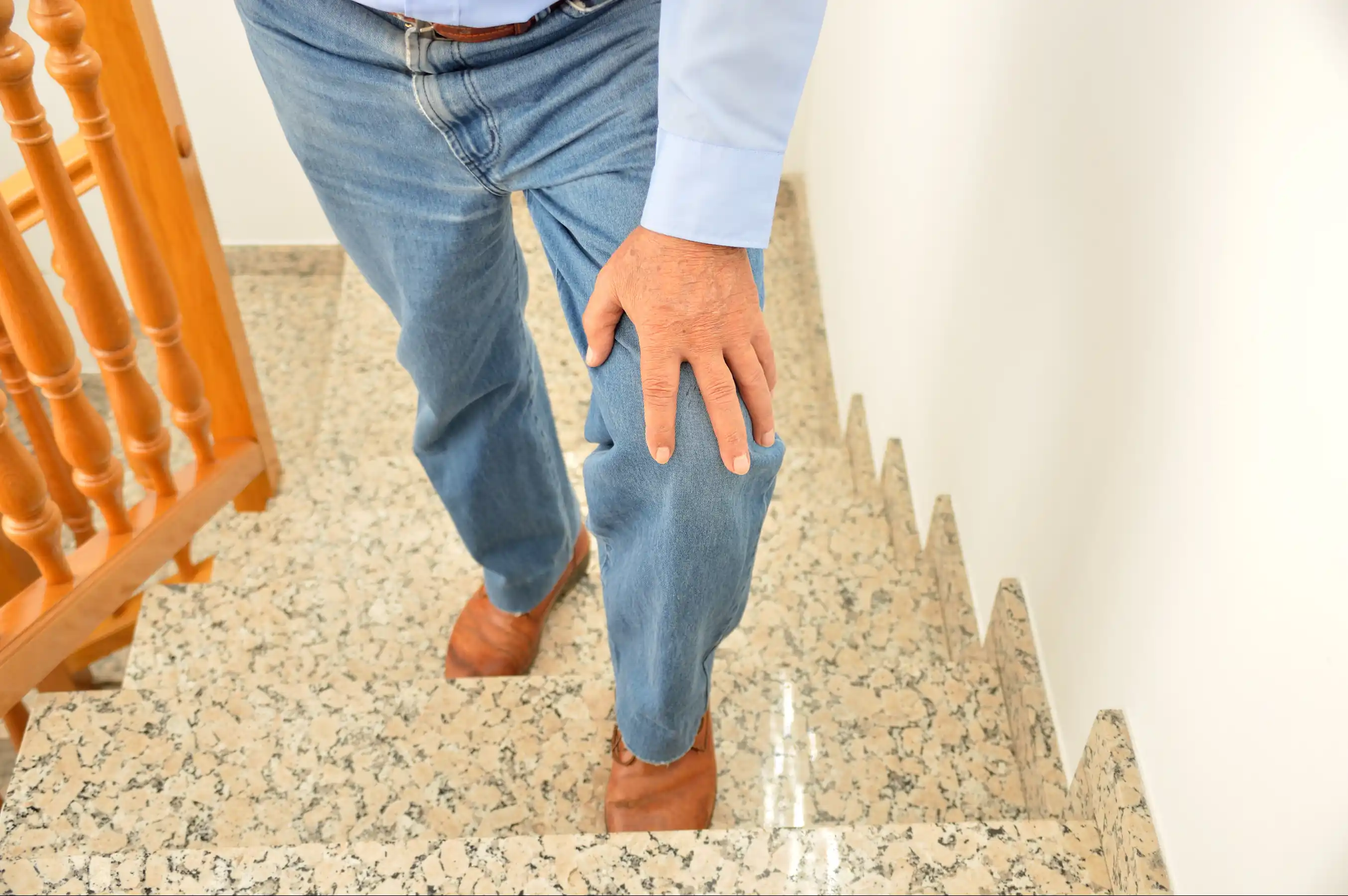
Climbing or descending stairs bends and straightens your knee over and over while it carries your full weight. That repeated load can irritate the tissues around your kneecap. Orthopedic surgeons note that pain and stiffness around the kneecap can make it hard to climb stairs, kneel, and handle other daily tasks.
Some people notice knee pain going up stairs. Others feel knee pain going down stairs. Either pattern is common, and stair pain is a recognized symptom of kneecap problems.
Patellofemoral Pain Syndrome: The Most Common Cause
Patellofemoral pain syndrome (PFPS), often called 'runner's knee,' is pain in the front of the knee, around or behind the kneecap. The kneecap is also known as the patella. PFPS is common in athletes, yet it can also affect people who do not play sports.
Common signs of PFPS include:
- A dull, aching pain in the front of the knee that usually starts gradually.
- Pain when climbing stairs, running, jumping, or squatting.
- Pain after sitting for a long time with your knees bent, such as in a car or movie theater.
- Popping or crackling sounds when you climb stairs or stand up after sitting.
Several triggers are linked to PFPS. Overuse, a sudden jump in activity, and weak or unbalanced hip and knee muscles are common ones. PFPS most often affects teens and young adults, while arthritis is more often to blame for knee pain in older adults.
Other Conditions That Can Cause Stair-Related Knee Pain
PFPS is not the only explanation. The table below compares conditions that can show up on stairs.
| Condition | What It Is | Helpful Clues |
|---|---|---|
| Patellofemoral pain syndrome | Pain around or behind the kneecap | Dull ache, pain after long sitting, popping or crackling |
| Meniscus tear | A tear in the cartilage cushion between the thighbone and shinbone | Often follows a sudden twist while bearing weight |
| Knee osteoarthritis | Wear and tear of knee cartilage over time | More often behind knee pain in older adults |
| Patellar tendinitis | Irritation of the tendon from the kneecap to the shinbone | Common in runners, skiers, cyclists, and jumping sports |
Each of these conditions is a recognized cause of knee pain. The St. Vincent's knee treatment team evaluates meniscus tears, ligament injuries, tendonitis, and osteoarthritis, so you do not have to sort out the cause alone.
How Is Stair Pain Different From Pain During Walking or Rest?
PFPS pain is usually tied to activity. It tends to build with bending activities and after long periods of sitting. That pattern is different from pain that stays constant or comes with other warning signs.
Pay attention if stair pain comes with swelling, redness, warmth, weakness, or a feeling that the knee gives way. The same goes for a knee that will not fully straighten. These symptoms call for a closer look from a knee specialist.
Simple Ways to Ease Knee Pain on Stairs at Home
Many cases of kneecap pain improve with basic care. Home treatment options include:
- Pausing the activities that trigger your pain until it settles.
- Switching to low-impact exercise, such as a stationary bike, elliptical, or swimming.
- Using the RICE method: rest, ice, compression, and elevation.
- Using cold packs for 20 minutes at a time, never directly on the skin.
- Trying over-the-counter nonsteroidal anti-inflammatory drugs (NSAIDs), such as ibuprofen or naproxen, if they are safe for you.
- Keeping a healthy weight to reduce pressure on your knees.
Check with a doctor before starting any medication, especially if you have other health conditions.
When Stair Pain Signals It's Time for an Evaluation
Pain that does not improve within a few days, or that makes the knee harder to move, is a reason to call a healthcare professional. Seek care sooner if you cannot bear weight, the knee gives out, swelling is marked, or the knee looks deformed.
At St. Vincent's Orthopedics, you see a board-certified physician at every visit, not a physician assistant or nurse practitioner. A knee exam often reveals the cause, since doctors can usually diagnose PFPS with a physical exam. An X-ray may rule out bone damage, and an MRI is used if symptoms do not improve with therapy.
If you need rehabilitation, the practice's in-house physical therapy team works with your physician to strengthen the muscles that support your kneecap. Patients who also want an athletic perspective can explore sports medicine care at the same practice.
Find Out What Is Behind Your Stair Pain at St. Vincent's Orthopedics
Knee pain on stairs is common, but it is not something you have to live with. The right diagnosis separates a simple overuse problem from a meniscus tear or arthritis, and it points to the right treatment.
If stairs have become a daily struggle, schedule an appointment with a knee specialist in Birmingham, AL at St. Vincent's Orthopedics. You can also call (205) 933-7838 and visit any of the practice's five locations, listed on the St. Vincent's Orthopedics website.
Frequently Asked Questions
Why does my knee hurt going downstairs?
Stairs bend the knee under your body weight, which can irritate the tissue around the kneecap. Patellofemoral pain syndrome is a common cause. Meniscus tears and arthritis can also trigger pain on stairs.
Why does my knee hurt going up stairs?
Climbing repeats the same knee bend under load. That stress can inflame the soft tissue around the kneecap. A clicking or crackling sound, or a dull ache after sitting, often points to patellofemoral pain syndrome.
Is knee pain on stairs a sign of arthritis?
It can be. Arthritis is more often the cause of knee pain in older adults, while patellofemoral pain syndrome more often affects teens and young adults. An exam can tell the two apart.
Can patellofemoral pain syndrome go away on its own?
It often improves with activity changes, ice, and physical therapy. It can return if you do not adjust your routine or strengthen the muscles around the knee, so follow-up care matters.
When should I see a knee specialist in Birmingham, AL?
See a specialist if pain lasts more than a few days, the knee is harder to move, or you notice swelling, instability, or locking. St. Vincent's Orthopedics offers exams at five Birmingham-area locations.
