Key Takeaways
- Your first visit starts with a conversation about how the injury happened and what symptoms you are having, followed by a hands-on physical exam.
- Imaging like X-ray or MRI is not automatic. It is ordered only when it will actually help confirm a diagnosis.
- Most sports injuries are treated with nonsurgical options first, such as rest, bracing, medication, or physical therapy.
- You will leave your visit with a specific treatment plan, not just a diagnosis.
- St. Vincent's Orthopedics in Birmingham, Gardendale, Clanton, Vestavia Hills, and One Nineteen sees patients directly with a board-certified orthopedic surgeon at every appointment, so you can walk in prepared and know what to expect.
Before You Even Sit Down: What to Bring
A little preparation makes your first visit more productive. It helps to bring:
- A list of your symptoms and when they started.
- Details about how the injury happened, if it was a specific event.
- Any prior imaging or medical records related to the injury.
- A list of current medications.
- Your insurance information.
Step One: Talking Through Your Injury
Every visit starts with a conversation, not a scan. According to Cleveland Clinic, providers ask how the injury happened and what symptoms the patient is having in order to make an accurate diagnosis. This history helps narrow down what is likely going on before any hands-on exam even begins.
Step Two: The Physical Examination
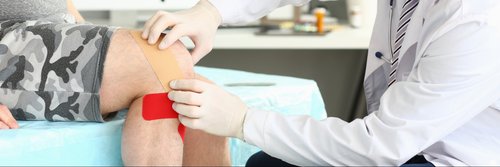
Next comes a hands-on physical exam. Your provider will check the injured area for common signs, including:
- Pain, swelling, or tenderness.
- Limited range of motion or stiffness.
- Clicking, popping, or grinding sounds.
- Looseness or instability in the joint.
- Bruising.
This exam alone often gives your provider a strong sense of what is going on, even before any imaging is ordered.
Step Three: Imaging, If It's Actually Needed
Not every visit requires imaging, and when it does, the type ordered depends on what your provider is looking for:
- X-ray: Best for looking at bone, such as ruling out a fracture.
- MRI: Best for viewing soft tissue like ligaments, tendons, and cartilage, including the meniscus.
- Ultrasound: Sometimes used in-office for a quick look at soft tissue.
As the American Academy of Orthopaedic Surgeons explains, an X-ray will not show a soft tissue injury like a meniscus tear, and MRI is the preferred method for diagnosing these injuries because of its accuracy. This is why your provider chooses the imaging type based on what they suspect is injured rather than ordering every test automatically.
What Happens After Diagnosis
Once your provider has a diagnosis, your visit shifts to building a plan. For many sports injuries, that plan starts with nonsurgical treatment:
| Visit Stage | What Happens | Why It Matters |
|---|---|---|
| History | You describe the injury and symptoms | Narrows down likely causes before any exam |
| Physical exam | Provider checks for pain, swelling, stability, and range of motion | Often confirms or rules out a diagnosis without imaging |
| Imaging (if needed) | X-ray for bone, MRI for soft tissue, ultrasound for a quick in-office look | Confirms diagnosis and rules out other injuries |
| Treatment plan | Rest, bracing, medication, physical therapy, or a surgical referral | Matches treatment to the specific injury and its severity |
Common first steps include the RICE protocol (rest, ice, compression, elevation), bracing or immobilization, anti-inflammatory medication, and a referral to physical therapy. Surgery is generally considered only when conservative treatment does not resolve the problem or the injury is severe enough to require it from the start.
Why the Physician-Directed Model Matters at Your First Visit
At St. Vincent's Orthopedics, you see your orthopedic surgeon directly at every appointment, including your first one. The practice's sports medicine team does not route patients through a physician assistant or nurse practitioner. That means the same board-certified surgeon evaluating your injury on day one is also the one guiding your treatment plan and any follow-up care.
If your treatment plan includes rehabilitation, St. Vincent's in-house physical therapy team works directly with your surgeon, so your recovery plan stays coordinated instead of split between separate offices.
Ready for Your First Visit?
Walking into a sports medicine appointment for the first time does not have to feel uncertain. You will talk through your injury, get a hands-on exam, receive imaging only if it is actually needed, and leave with a clear plan built around your specific injury and goals.
If you are dealing with a sports injury and want a straightforward first visit with a board-certified orthopedic surgeon, request an appointment with St. Vincent's Orthopedics at one of its Birmingham, Gardendale, Clanton, Vestavia Hills, or One Nineteen locations.
Frequently Asked Questions
What should I bring to my first sports medicine appointment?
Bring a list of your symptoms and when they started, details about how the injury happened, any prior imaging or records, your current medications, and your insurance information.
Will I need an MRI at my first sports medicine visit?
Not necessarily. Imaging is ordered based on what your provider suspects after the physical exam. X-rays are used to check for bone injuries, while MRI is used for soft tissue concerns like ligament or meniscus tears.
Do I need a referral to see a sports medicine specialist near me?
Requirements vary by insurance plan. St. Vincent's Orthopedics accepts most major insurance plans, so it is a good idea to check with your insurance provider or St. Vincent's office ahead of your visit to confirm whether a referral is required.
Will I see a physician assistant instead of a doctor?
No. St. Vincent's Orthopedics uses a physician-directed model, which means you see your board-certified orthopedic surgeon at every visit rather than being managed by a physician assistant or nurse practitioner.
What happens if my injury does not need surgery?
Many sports injuries are treated successfully without surgery. Your provider may recommend rest, bracing, anti-inflammatory medication, or physical therapy, and will monitor your progress to see whether that treatment is enough or whether further steps are needed.